How On-Device AI and Advanced Graphics Processing Are Changing the Student Experience
In short
AI, state-of-the-art hardware, and GPU acceleration: the combination that is transforming the experience of creative students.
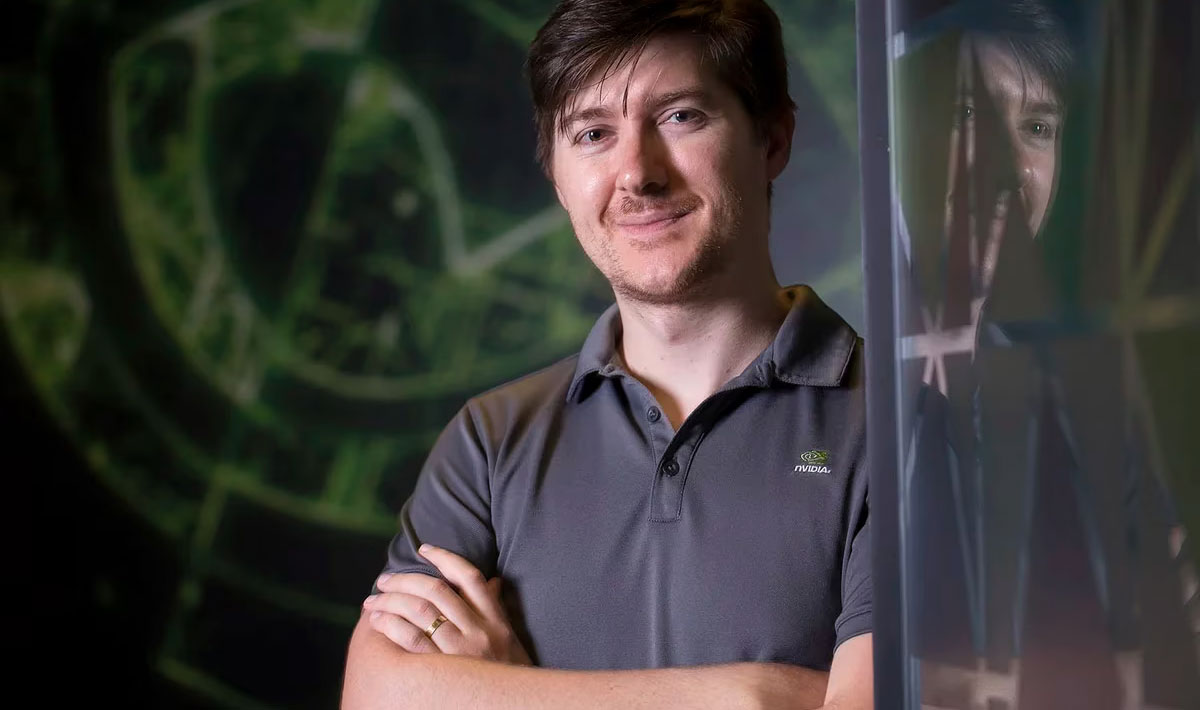
By Alexandre Ziebert, Technical Marketing Manager for Latin America, NVIDIA
When inspiration strikes, nothing is more discouraging than a slow tool or a screen with a frozen document. Creative applications must be fast and fluid — like an extension of our imagination that keeps up with every idea.
New generations of graphics processors incorporate specialized capabilities to accelerate tasks that are becoming increasingly important in creative workflows, such as running artificial intelligence models, real-time 3D rendering, and high-resolution video editing. These technologies enable students, creators, and professionals to work more efficiently with AI-powered tools for design, animation, audiovisual production, and content creation.
At the same time, the software ecosystems associated with these platforms have evolved to optimize the performance of hundreds of creative applications widely used in the industry. As a result, it is possible to improve system stability, accelerate complex editing processes, and take advantage of AI-based features that facilitate tasks such as video enhancement, live streaming, visual effects creation, and digital content generation.
Nonstop Editing, Unlimited Creativity
Today, even students who are just getting started in video editing have access to cameras and devices capable of capturing images of extraordinary quality. However, working with this type of content often requires significant processing power, especially when adding effects, color corrections, or AI-based tools.
At the same time, content creation has become more dynamic than ever. Whether for a school project, social media, or a professional portfolio, students need to produce, edit, and publish materials more quickly and with higher quality.
In this context, the most advanced graphics processing technologies allow users to work more smoothly with high-resolution videos, reduce wait times during editing, and speed up tasks that used to take hours. This makes it easier for creators to focus on developing their ideas and telling stories, rather than wasting time waiting for files to process or export.
Local, Private, and Unlimited AI!
Anyone with a GeForce RTX GPU can use it to run AI models locally, serving as the brain for a wide range of applications — from a simple chatbot to image generation or even powerful development agents. Everything is done privately and securely, since the data stays on the system. And you can use it without limits — no subscriptions or token quota limits. You don’t even need an internet connection!
Now Students Can Create New Worlds From Their Ideas!
More specialized student profiles, such as 3D modelers and animators, often work with large scenes that require significant computing power. They need hardware power to optimize their complex and time-consuming workflows, as well as high-performance systems that allow them to preview their work in real time and automate tasks.
For all these profiles, NVIDIA offers a three-step approach to accelerate content creation.
First, GeForce RTX GPUs deliver high performance for 3D rendering thanks to their dedicated RT Cores, which perform advanced lighting calculations using ray tracing.
Second, the NVIDIA OptiX development kit allows for better utilization of the hardware and incorporates AI-powered noise reduction features, helping images display more quickly while the full rendering continues to run in the background.
Finally, NVIDIA DLSS technology enhances the performance of 3D viewers by generating high-resolution images from lower-resolution data and using frame generation to increase display speed.
The result is a much faster rendering experience, allowing artists to view their work in real time, navigate complex scenes, and significantly speed up export processes.
In conclusion, as artificial intelligence and creative tools continue to evolve, students have access to capabilities that, just a few years ago, were reserved for large studios or specialized teams. The opportunity lies not just in using these technologies, but in learning to make the most of them to develop new skills, explore different forms of expression and prepare for the creative professions of the future. Because the best tools don’t do the work for us — they let us imagine more and create better.